




WISMO stands for “Where Is My Order?”, one of the most common customer queries in ecommerce. It refers to situations where customers reach out to a brand to check the status of their delivery, usually due to a lack of timely updates or unclear communication after checkout. At its core, WISMO reflects a gap in post-purchase visibility and highlights the need for more proactive, transparent communication.
In Indian ecommerce, customer expectations have changed faster than logistics systems. According to industry estimates, over 50% of customer support tickets are related to order status queries. That’s not a minor issue, it’s a serious scaling bottleneck.
As brands expand into Tier-2 and Tier-3 markets, delivery timelines naturally become less predictable. Customers, unsure about when their order will arrive, often reach out with a simple but frequent question: “Where is my order?”
This is exactly where WISMO becomes critical, not just as a support issue, but as a reflection of the overall customer experience.
In this blog, we’ll explore what drives these queries, why they matter more than most brands realize, and how modern logistics and communication systems are solving them.
Why WISMO Ecommerce Queries Start After Checkout
Customers today aren’t just buying products, they’re buying certainty. The moment an order is placed, expectations shift from product quality to delivery clarity. People want to know when it will arrive, where it is right now, and whether they can rely on that timeline.
The problem begins when that clarity is missing. After shipping, updates often become inconsistent or delayed. Estimated delivery dates don’t always match reality, and communication from brands tends to be reactive instead of proactive. For customers, this creates a silent gap, one where they’re left guessing instead of being informed.
That gap between expectation and reality is what drives most order-related queries. When customers don’t see movement or receive updates, uncertainty builds quickly. And instead of waiting, they reach out, turning a simple delivery into a support interaction that could have been avoided.
Understanding WISMO in Ecommerce and Why It Happens
In an ideal journey, customers shouldn’t have to ask where their order is. They should already know. But in reality, gaps in communication, inconsistent tracking updates, and unclear delivery timelines leave customers uncertain. That uncertainty quickly turns into action—they email, chat, or call support, not because they want to, but because they feel they have no other way to get clarity.
At its core, WISMO reflects a breakdown in visibility and communication. It shows that the system is reacting to customer questions instead of preventing them in the first place. And as order volumes grow, these small gaps scale into a significant operational challenge.
How WISMO Shows Up in Real Scenarios:
These queries don’t happen randomly, they follow predictable patterns across the delivery journey:
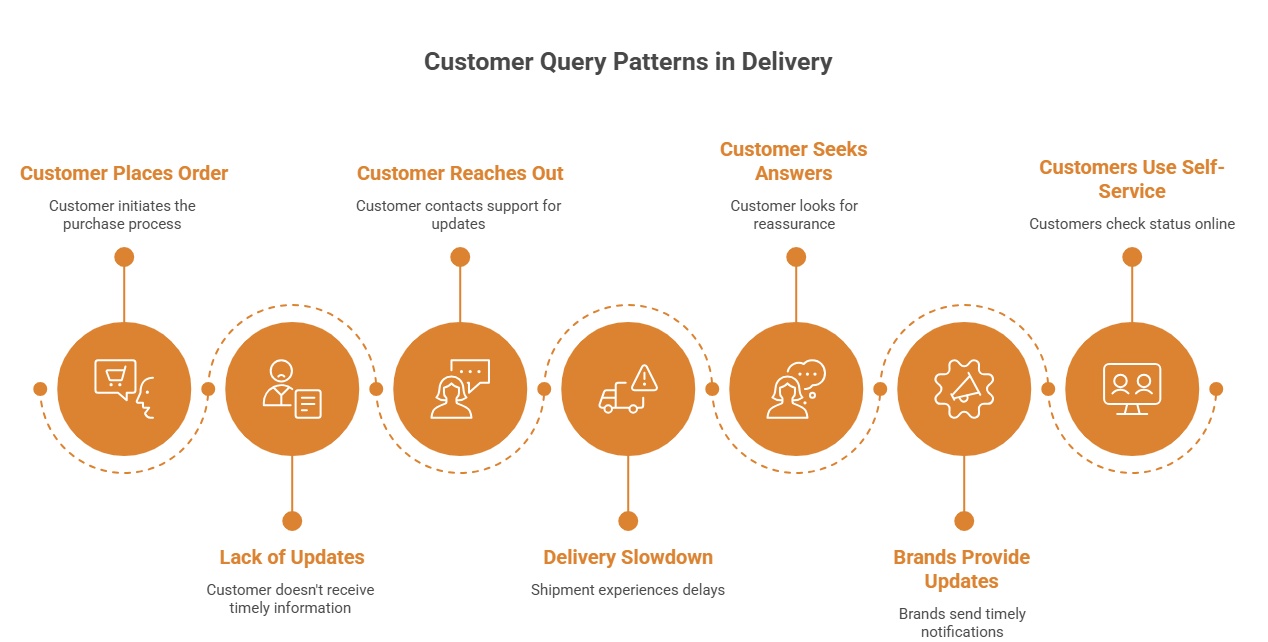
- The First Check-In:
A customer places an order, doesn’t receive meaningful updates, and reaches out asking, “Where is my package?” - When Deliveries Slow Down:
If a shipment is delayed or stuck in transit, customers naturally look for answers. Without clear updates, they turn to support for reassurance. - When Brands Get It Right:
Some brands reduce these queries by sending timely updates through SMS, email, or WhatsApp, answering the question before it’s even asked. - Self-Service Behavior:
Increasingly, customers prefer checking order status themselves through branded tracking pages, rather than contacting support.
Across all these scenarios, one thing stays consistent: WISMO isn’t just about tracking, it’s about how well a brand communicates after the sale is complete.
How eShipz Helps Solve WISMO Ecommerce Challenges
Solving this problem isn’t about adding another tracking link, it’s about rethinking the entire post-purchase experience. Tracking alone gives data, but what customers really need is clarity. That’s where platforms like eShipz come into the picture, bringing communication, visibility, and automation together as one connected system instead of isolated features.
When these elements work in sync, something important shifts. Customers stop chasing updates because they’re already informed. Support teams spend less time answering repetitive queries, and operations become more predictable as issues are identified early, not after escalation.
Key Capabilities That Make the Difference
- Real-Time Order Tracking
Instead of relying on fragmented courier updates, leading brands bring all shipment data into a single, unified view. This ensures customers see accurate, live movement of their orders, not outdated status messages. - Automated Notifications Across Channels
Updates shouldn’t depend on customers checking manually. Timely alerts via SMS, WhatsApp, or email at every key milestone, order confirmed, shipped, out for delivery, keep customers informed without effort. - Accurate, Dynamic ETA Predictions
Static delivery dates often create false expectations. Smarter systems adjust delivery timelines based on real-time conditions like location, courier performance, and delays, giving customers a more realistic sense of when to expect their order. - Branded Tracking Pages for Self-Service
Instead of redirecting customers to third-party courier pages, brands are moving towards owned tracking experiences. These pages not only show order status but also reduce dependency on support teams by letting customers find answers themselves. - Exception and Delay Alerts
The biggest trigger for WISMO queries is silence during delays. When customers are proactively informed about issues, before they notice them, it builds trust instead of frustration.
What’s interesting is that many fast-growing ecommerce brands are no longer treating these as separate features. They’re building, or adopting, systems where all of this works together seamlessly in the background. The result isn’t just fewer support tickets, but a smoother, more reliable experience that customers don’t have to think twice about.
And that’s really the goal, not just to answer “Where is my order?”, But to make sure customers never feel the need to ask it in the first place.

How Leading Brands Are Reducing Support Load
As ecommerce scales, the real challenge isn’t just handling customer queries, it’s reducing the need for them in the first place. Leading brands have started recognizing that most support tickets, especially around order status, are preventable. Instead of building larger support teams to manage volume, they’re redesigning the experience so customers don’t feel the need to reach out at all.
Shift from Reactive to Proactive Systems
|
Approach |
Traditional |
Modern |
|
Communication |
Customer asks |
Brand informs first |
|
Tracking |
Static | Real-time |
| Support | Manual replies |
Automated updates |
|
Visibility |
Limited |
End-to-end |
This shift from reactive to proactive operations is what separates growing brands from scalable ones. When customers are consistently informed, support becomes lighter, operations become smoother, and trust builds naturally over time. It’s no longer about responding faster, it’s about making sure the question never needs to be asked.
Trends Shaping the Future of Post-Purchase Experience
The scale of WISMO isn’t guesswork, it’s visible in the numbers. What looks like a simple customer query is actually one of the biggest cost and experience drivers in ecommerce.
Here’s what the data clearly shows:
- 30–50% of all support tickets are related to order status queries
- In many cases, this goes beyond 50% of total inbound queries
- 1 support ticket per ~15 orders is the industry average
- 90%+ of customers actively track their orders after purchase
- Customers check tracking 4–5 times per order on average
- ~70% of shoppers expect real-time tracking as a standard
- Proactive updates can reduce WISMO queries by 50–80%
- Branded tracking pages can cut queries by 60%+
- AI-driven systems reduce support interactions by 70–90%
- Each support ticket costs $5–$25 to resolve
- WISMO can cost brands millions annually in support overhead
These numbers point to one clear insight: the real opportunity isn’t in handling WISMO better, it’s in eliminating the need for it altogether.
It’s Not About Tracking, It’s About Trust
At its core, WISMO isn’t a logistics problem, it’s a trust gap. Customers don’t ask “Where is my order?” because they’re impatient; they ask because something feels uncertain. When updates are unclear or delayed, even a smooth delivery can feel unreliable. That’s why the brands that stand out today aren’t just focused on moving shipments faster, they’re focused on keeping customers informed, reassured, and confident throughout the journey.
In modern ecommerce, visibility is no longer a backend function, it is the experience. The shift is clear: from reactive updates to proactive communication, from static tracking to predictive clarity. And this is exactly where platforms like eShipz quietly make a difference, by bringing tracking, communication, and automation together to create a more reliable post-purchase experience.
The time to rethink how you handle delivery visibility isn’t later, it’s now.