



In 2026, ecommerce websites are central to how Americans discover, compare, buy, and receive products. Large online marketplaces and niche retailers have changed how consumers engage with brands and decide what to purchase. The market’s scale shows how firmly digital commerce is embedded in retail: U.S. retail ecommerce sales reached $340.2 billion in the second quarter of 2026, according to the U.S. Census Bureau. That represented a 12.2% increase from the second quarter of 2025, and ecommerce made up 17.1% of total U.S. retail sales during the quarter.
This growth extends well beyond a few product types. Ecommerce is important across electronics, fashion, groceries, furniture, home improvement, beauty, household goods, and daily essentials. Shoppers can choose from thousands of ecommerce websites, each with its own product selection, shopping experience, delivery choices, and services. Census data also indicates that U.S. ecommerce sales in 2025 had already reached approximately $1.23 trillion on a seasonally adjusted basis across the four quarters, based on the quarterly estimates reported for the year.
Customer expectations are rising too. The 2026 DHL E-Commerce Trends Report’s U.S. findings show that 93% of U.S. online shoppers identify as convenience-driven consumers, prioritizing factors such as fast, free delivery and easy returns. Based on responses from 1,000 U.S. shoppers, the report also points to the growing value of speed, trust, transparency, and smooth online experiences. That’s why competition among the top ecommerce websites isn’t only about carrying the biggest catalog. Customers judge the full buying process, including how fast they find a product, compare options, understand checkout, see an expected delivery date, track an order, and handle a return.
Digital shopping is also becoming more closely tied to physical retail. Major retailers such as Walmart, Target, Home Depot, and Lowe’s connect their online stores with physical locations, pickup services, warehouses, and delivery networks. Omnichannel fulfillment is now a major part of the ecommerce experience. For businesses, the opportunity is substantial, but customer standards are rising at the same time. The best ecommerce websites don’t simply list the most products. They make buying easier from discovery and checkout through fulfillment, tracking, delivery, and returns.
That’s what makes the U.S. ecommerce market so interesting in 2026. Some companies win with huge marketplaces, while others focus on specific product categories or stand out through premium service, omnichannel retail, personalization, and convenient fulfillment.
This guide examines the top ecommerce websites in the USA based on their ecommerce presence, customer experience, website usability, fulfillment capabilities, omnichannel experience, and relevance to today’s online shoppers. The focus is on why these businesses matter and what other ecommerce brands can learn from them.
Top 10 Ecommerce Websites in the USA
The U.S. ecommerce market is one of the world’s most competitive, with millions of people using digital stores and marketplaces to find, compare, and buy products every day. Amazon, Walmart, specialized retailers, and newer ecommerce companies give shoppers more options than ever. As expectations for convenience, delivery, personalization, and returns shift, the top ecommerce websites can’t compete on selection or price alone.
The best ecommerce websites make every step easier, from the first search through checkout, delivery, tracking, and returns. This article looks at the top ecommerce websites in the USA, why they stand out, and what growing brands can learn from the best e commerce sites in the market.
| Rank | Ecommerce Website | Customer Experience | What Makes It Stand Out |
|---|---|---|---|
| 1 | Amazon | Convenient discovery, ordering, delivery, and returns | Marketplace scale and fulfillment |
| 2 | Walmart | Strong online and physical retail integration | Omnichannel shopping and everyday essentials |
| 3 | eBay | Flexible marketplace experience | Wide product selection and seller ecosystem |
| 4 | Target | Connected digital and in-store experience | Omnichannel retail |
| 5 | Home Depot | Detailed product information and fulfillment options | Home improvement specialization |
| 6 | Apple | Simple and highly controlled shopping journey | Premium product and ecosystem experience |
| 7 | Lowe’s | Strong online-to-store experience | Home improvement and fulfillment |
| 8 | Nordstrom | Service-focused and personalized shopping | Fashion and premium retail |
| 9 | Best Buy | Strong product discovery and comparison | Electronics expertise and omnichannel fulfillment |
| 10 | Wayfair | Visual discovery and personalization | Furniture and home-focused ecommerce |
These businesses operate very different models, so the list should not be viewed as a comparison between identical companies. Amazon and eBay are major marketplaces, Walmart and Target combine ecommerce with physical retail, Apple operates a highly controlled direct-to-consumer model, and Wayfair has built its identity around online furniture and home shopping.
What connects them is their ability to make digital commerce an important part of the customer journey.
1. Amazon
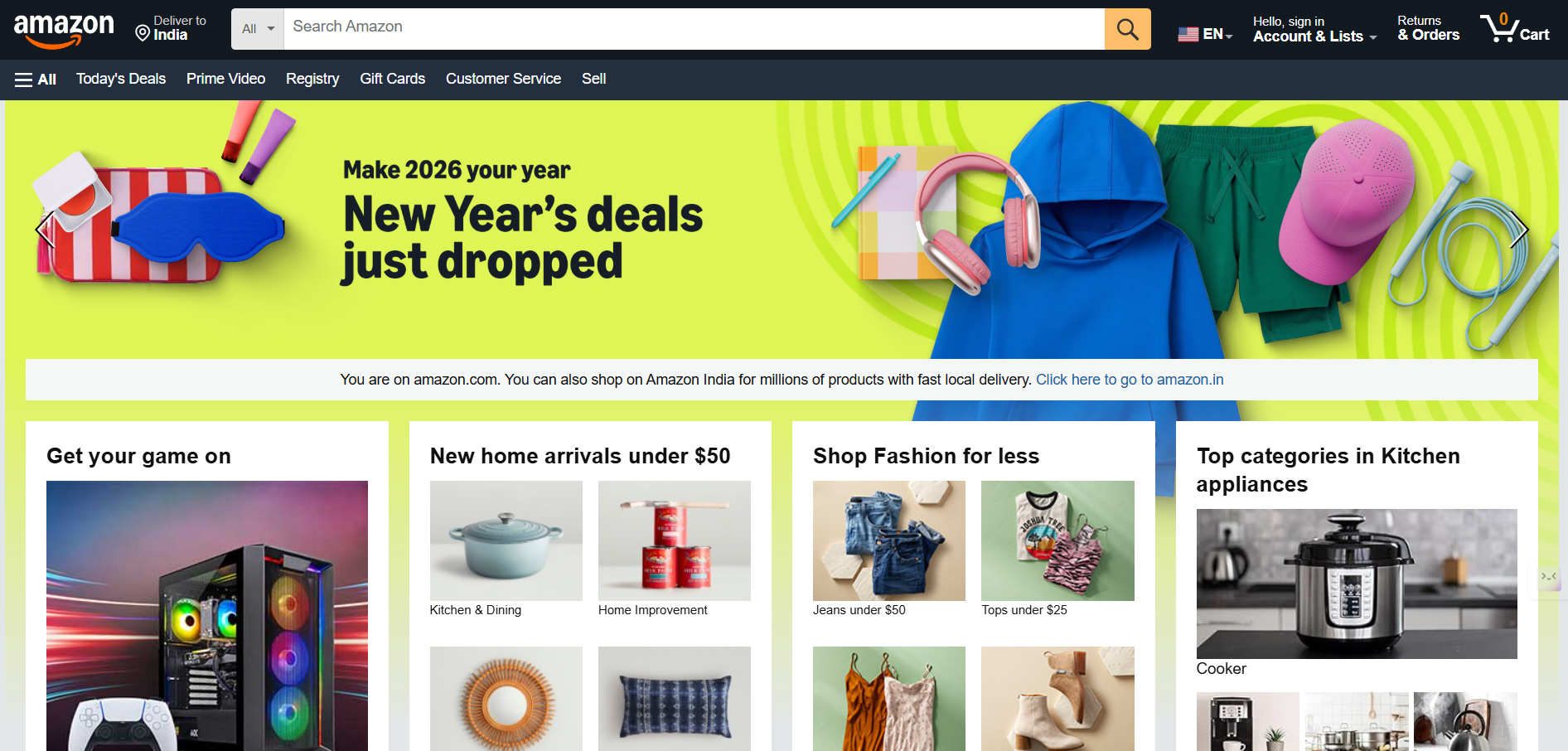
Amazon remains one of the most recognizable names in online shopping. It shows how a large-scale ecommerce website can combine product discovery, purchasing, fulfillment, and customer service in one place. Its marketplace is a major advantage: customers can browse a huge range of products and compare brands, sellers, prices, specifications, delivery options, and customer feedback on a single platform. That means they don’t have to visit several websites to research a purchase.
Amazon focuses heavily on making the buying process convenient. Personalized recommendations, saved payment details, order history, delivery tracking, and digital returns make repeat purchases easier. Customers can go from finding a product to checking out with few obstacles.
Fulfillment is another central part of Amazon’s customer experience. Delivery estimates appear while customers shop, and tracking details and shipment updates continue after an order is placed. This gives shoppers a clearer view of what happens between checkout and delivery.
Key features that contribute to Amazon’s ecommerce experience include:
- Large product marketplace: Customers can find products across almost every major retail category.
- Personalized recommendations: Product suggestions help customers discover relevant items.
- Convenient checkout: Saved customer and payment information makes repeat purchasing easier.
- Order tracking: Customers can monitor shipments after purchase.
- Flexible returns: Digital return processes simplify post-purchase management.
- Integrated fulfillment: Delivery speed and availability are closely connected to the shopping experience.
For other top ecommerce companies, Amazon demonstrates that ecommerce success is not simply about building a large catalog. Product discovery, checkout, fulfillment, tracking, and returns need to function as one connected customer journey.
2. Walmart
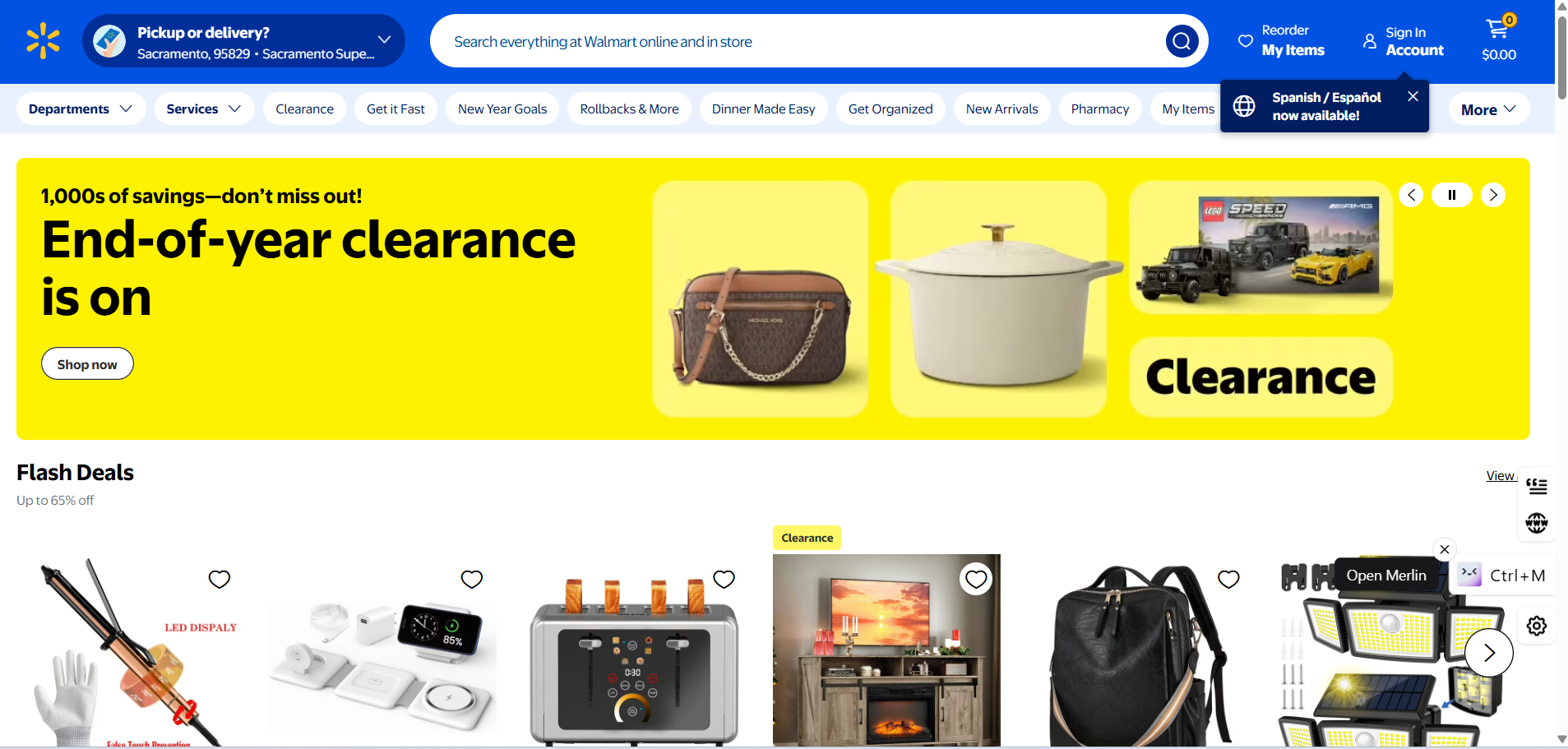
Walmart has built a powerful ecommerce presence by combining its extensive physical retail network with digital commerce. Rather than treating its website as a separate channel, the company connects online shopping with stores, pickup, delivery, and other fulfillment options. This omnichannel model is one of Walmart’s biggest strengths. A customer can discover a product online and, depending on availability and location, choose a fulfillment method that suits their needs. For some shoppers, home delivery may be the most convenient option. For others, collecting an order from a nearby store may make more sense.
Walmart’s broad product assortment is another important part of its online experience. Customers can shop for groceries, electronics, household products, apparel, beauty products, appliances, and everyday essentials through the same digital ecosystem.
The company also benefits from the familiarity of its physical stores. Customers who already know the brand can move between online and offline shopping without having to learn an entirely new retail environment.
Key features of Walmart’s ecommerce experience include:
- Omnichannel shopping: Online and physical retail experiences are connected.
- Store pickup: Customers can use stores as convenient fulfillment locations where available.
- Home delivery: Products can be delivered directly to customers.
- Broad product categories: Everyday essentials and specialty products are available through the same ecosystem.
- Digital product discovery: Search, categories, and recommendations help customers navigate a large catalog.
- Connected retail infrastructure: Stores, inventory, fulfillment, and digital channels work together.
For other retailers, Walmart shows how a traditional retail network can become an advantage in ecommerce when physical stores and digital channels are connected effectively.
3. eBay
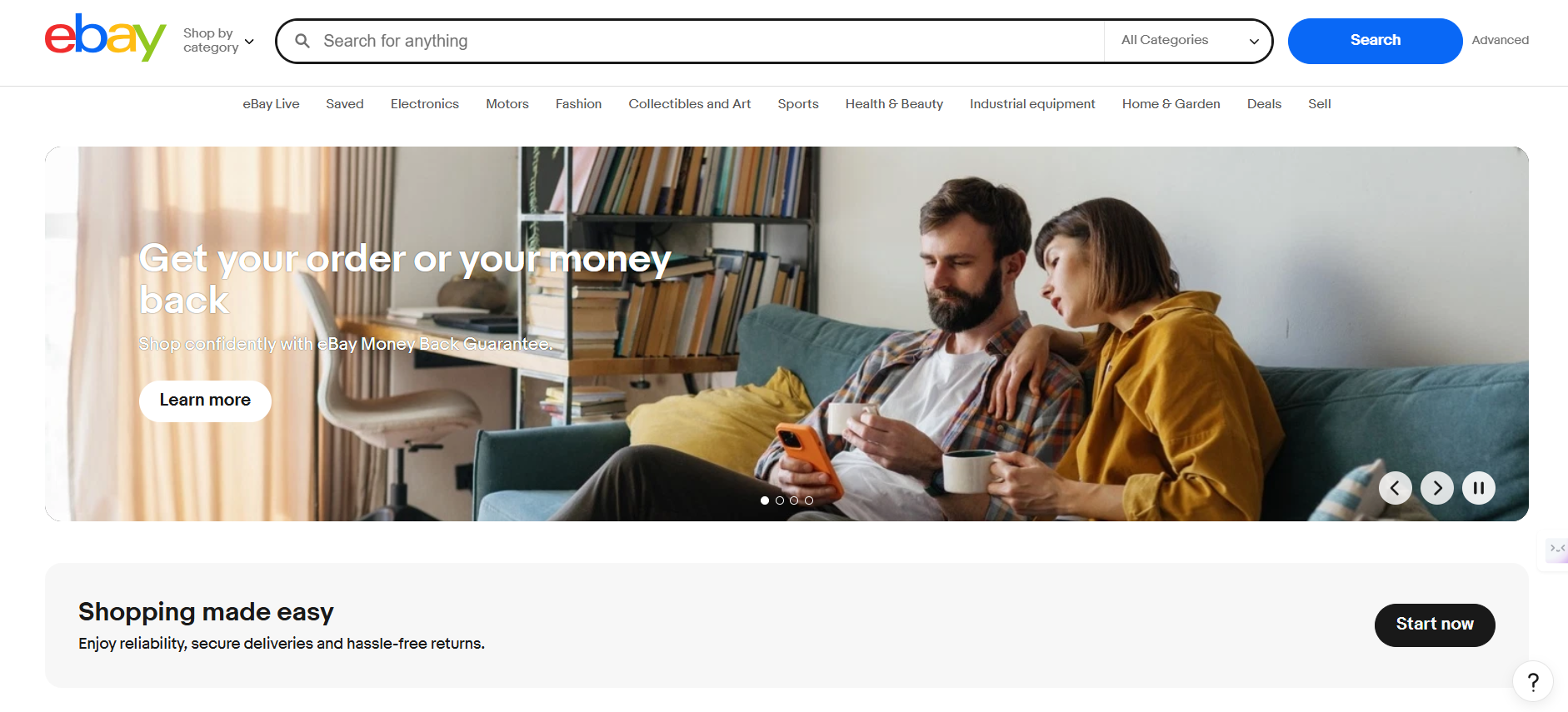
eBay uses a different ecommerce model. Rather than operating mainly as a traditional retailer, it connects buyers directly with sellers through its marketplace. That setup gives eBay an extremely broad product selection. Customers can find new products, used items, refurbished electronics, collectibles, fashion, automotive products, and items that conventional retailers may not carry. The experience depends heavily on discovery and trust in the marketplace. Before buying, shoppers need clear details about the product, seller, condition, pricing, shipping, and transaction terms.
eBay also offers fixed-price shopping alongside auction-based transactions. That gives the platform a distinct feel compared with conventional online stores.
Key features that support eBay’s ecommerce experience include:
- Marketplace model: Independent sellers can list products for customers to discover.
- Wide product selection: New, used, refurbished, and collectible products can exist within the same marketplace.
- Search and filtering: Customers can narrow down large numbers of listings.
- Seller information: Buyers can evaluate sellers and listings before purchasing.
- Auction functionality: Certain products can be purchased through bidding.
- Buyer-focused protections: Marketplace systems help create greater confidence when purchasing from independent sellers.
eBay is also an important example for businesses interested in building an ecommerce platform rather than simply operating an online store. Its model demonstrates how technology can connect a large number of independent sellers with a large customer base.
4. Target
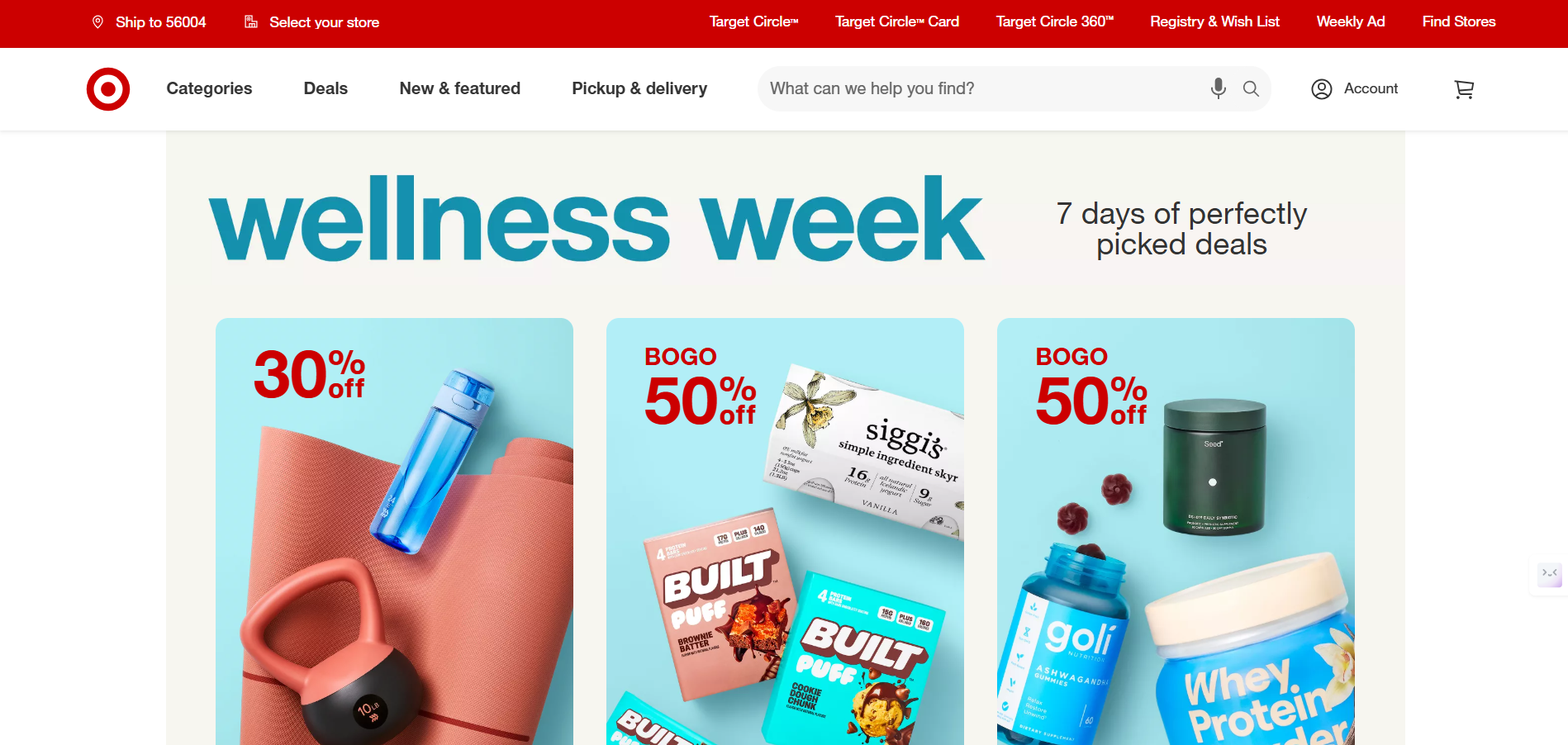
Target has built a strong digital shopping experience by connecting ecommerce websites with its physical retail network. Its biggest advantage is how its website, mobile experience, stores, pickup services, and delivery options work together. Customers can start shopping online, then choose how to receive an order based on availability.
The retailer also puts real focus on digital merchandising. Rather than treating the site as one large product catalog, it helps customers find seasonal collections, categories, brands, and curated products. That matters because many online shoppers start browsing without knowing exactly what they want. A good ecommerce experience needs to support direct searches while giving people room to discover products along the way.
Key features of Target’s ecommerce experience include:
- Online and store integration: Digital and physical shopping channels work together.
- Pickup options: Customers can collect eligible purchases from stores.
- Home delivery: Products can be delivered directly to customers.
- Strong product presentation: Visual merchandising supports product discovery.
- Category-based navigation: Customers can browse products according to their shopping needs.
- Omnichannel convenience: Customers can move between digital and physical channels.
Target demonstrates that the best ecommerce websites do not necessarily need to operate like online-only marketplaces. A physical retail network can become a significant advantage when it is properly integrated into the digital customer journey.
5. Home Depot
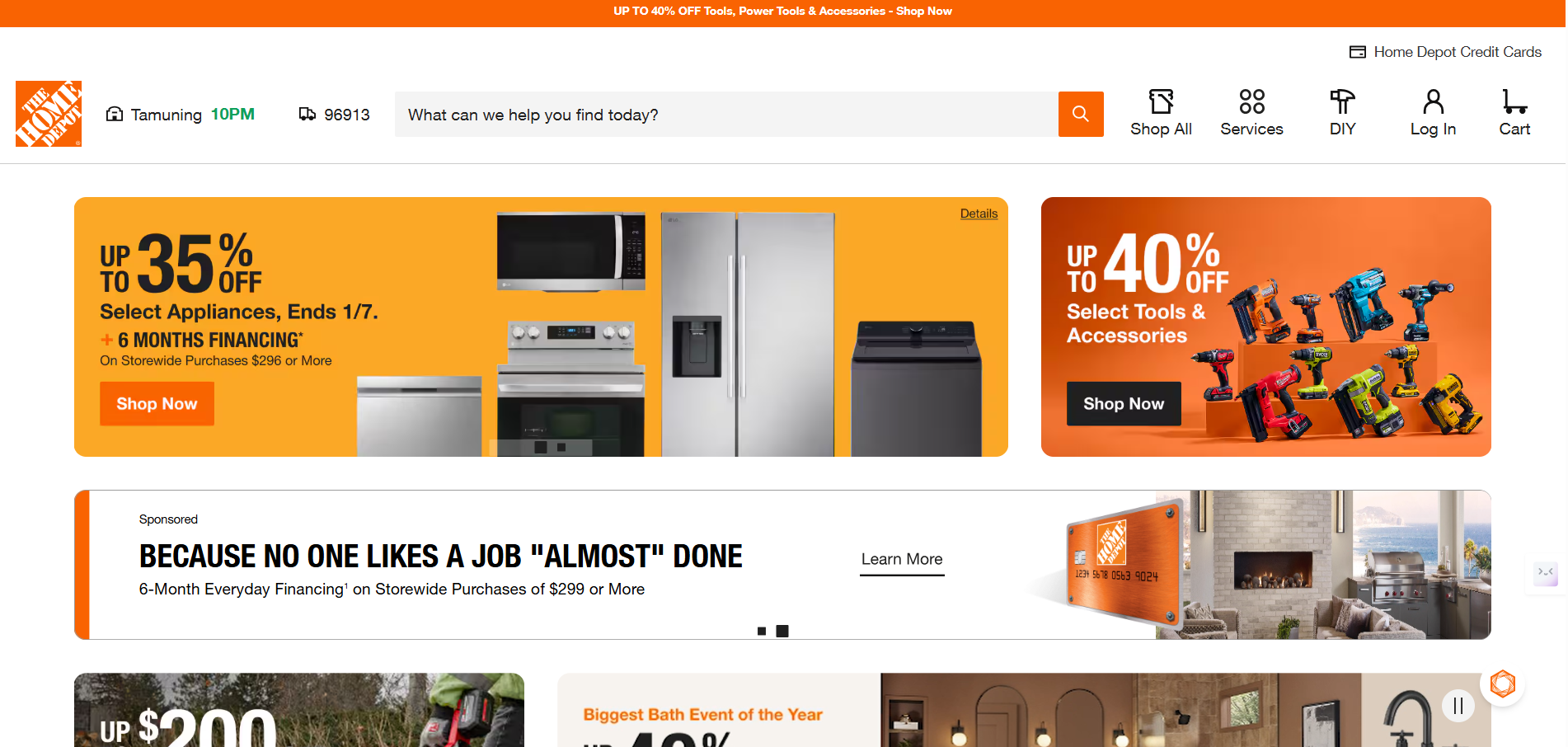
Home Depot shows how ecommerce websites can fit the needs of a specific retail category. Home improvement purchases usually take more research than everyday shopping. Before buying, customers may need to check product dimensions, materials, specifications, installation requirements, compatibility, availability, and delivery options.
That makes detailed product information central to Home Depot’s ecommerce experience. The website helps customers buy products and research larger projects. Categories, guides, stock availability, and fulfillment choices all shape the decision.
Its link to physical stores matters too. Customers can research online, then visit a store, pick up an item, or arrange delivery.
Key features of Home Depot’s ecommerce experience include:
- Detailed product information: Customers can research products before purchasing.
- Project-oriented shopping: Products can be discovered based on specific home improvement needs.
- Store integration: Online shopping is connected with physical locations.
- Pickup and delivery: Customers have different fulfillment options where available.
- Product availability information: Customers can check whether products are available for purchase or pickup.
- Category expertise: The website is built around the specific needs of home improvement shoppers.
Home Depot shows why the top ecommerce websites cannot all use the same customer experience strategy. The right approach depends on the complexity of the product and the type of decision customers need to make.
6. Apple
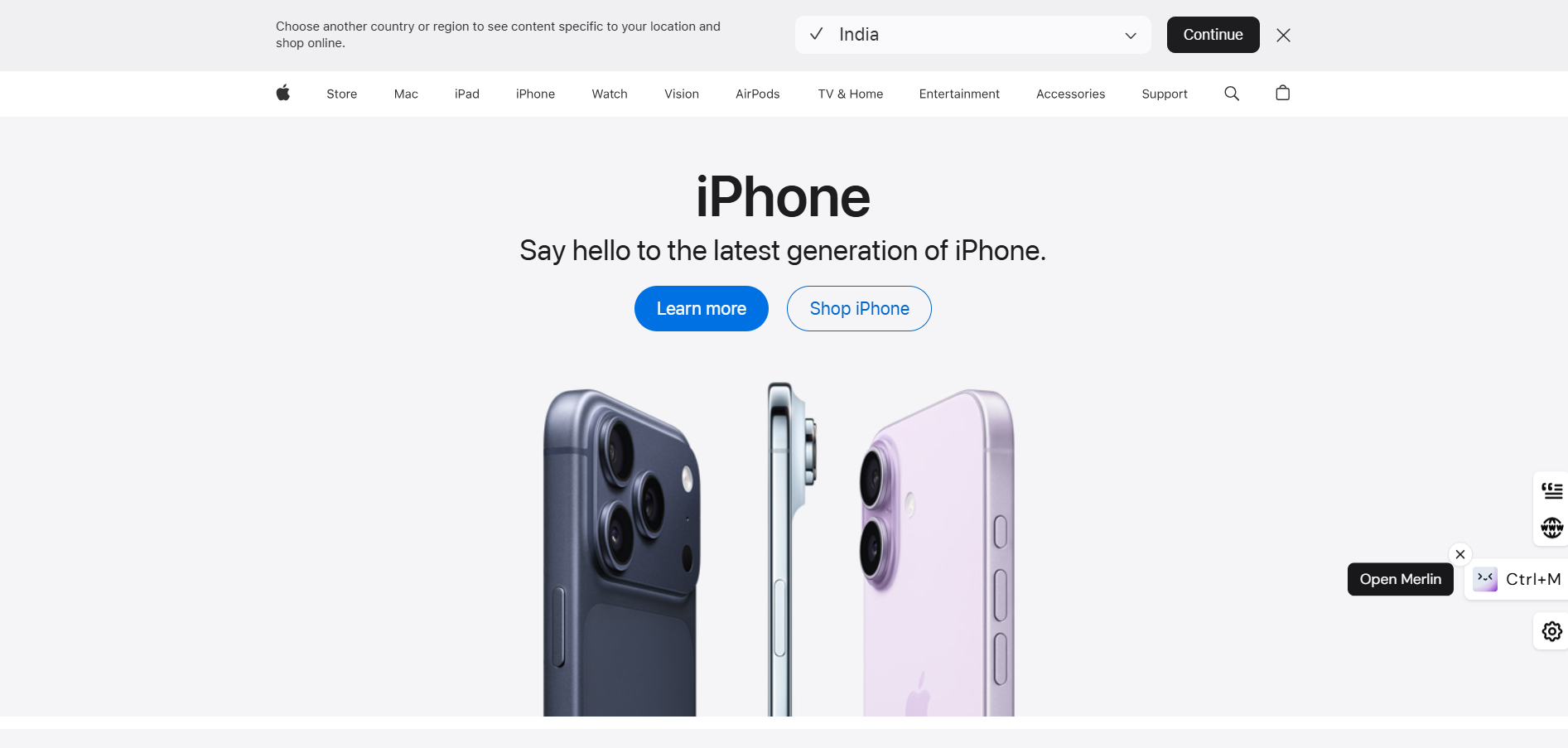
Apple takes a controlled, premium approach to ecommerce. Instead of operating like marketplaces with millions of products from different sellers, Apple sells within its own ecosystem of products and services. That control keeps the experience consistent from product discovery and presentation to configuration, checkout, fulfillment, and support.
Product presentation is one of the most recognizable parts of Apple’s online experience. Customers can explore features, compare models, choose configurations, and see how devices work together across the wider ecosystem. Apple also links its online store to physical locations and customer support, creating a smooth connection between online research and in-store interactions.
Key features of Apple’s ecommerce experience include:
- Clean product presentation: Products are presented with strong visual and informational detail.
- Product comparison: Customers can compare different models and configurations.
- Customization: Customers can select configurations based on their requirements.
- Ecosystem integration: Products are presented as part of a broader technology ecosystem.
- Online and physical retail integration: Customers can interact with the brand across digital and store channels.
- Support integration: Purchasing and ownership experiences connect with support and service.
Apple demonstrates that an online shopping platform does not need an enormous product catalog to create a strong customer experience. A focused assortment can work extremely well when product discovery and purchasing are clear and consistent.
7. Lowe’s

Lowe’s builds its ecommerce experience around home improvement, appliances, tools, building materials, and related categories. Like Home Depot, it sells products that often require customers to review details before buying. Specifications, measurements, store availability, installation needs, and fulfillment options can all affect the final choice. Lowe’s ties that research process to its physical store network, so customers can browse online, check availability, visit a store, or choose a fulfillment option that fits their needs.
That flexibility works well for customers who prefer to research online but finish the purchase at a physical location.
Key features of Lowe’s ecommerce experience include:
- Detailed product information: Helps customers understand products before purchase.
- Store integration: Customers can connect digital shopping with physical locations.
- Pickup options: Eligible products can be collected from stores.
- Delivery services: Larger products can be fulfilled through delivery options.
- Project-based discovery: Customers can find products based on home improvement requirements.
- Omnichannel shopping: Online and offline experiences work together.
For retailers in complex product categories, Lowe’s demonstrates how ecommerce can support the entire customer decision-making process rather than simply functioning as a checkout channel.
8. Nordstrom
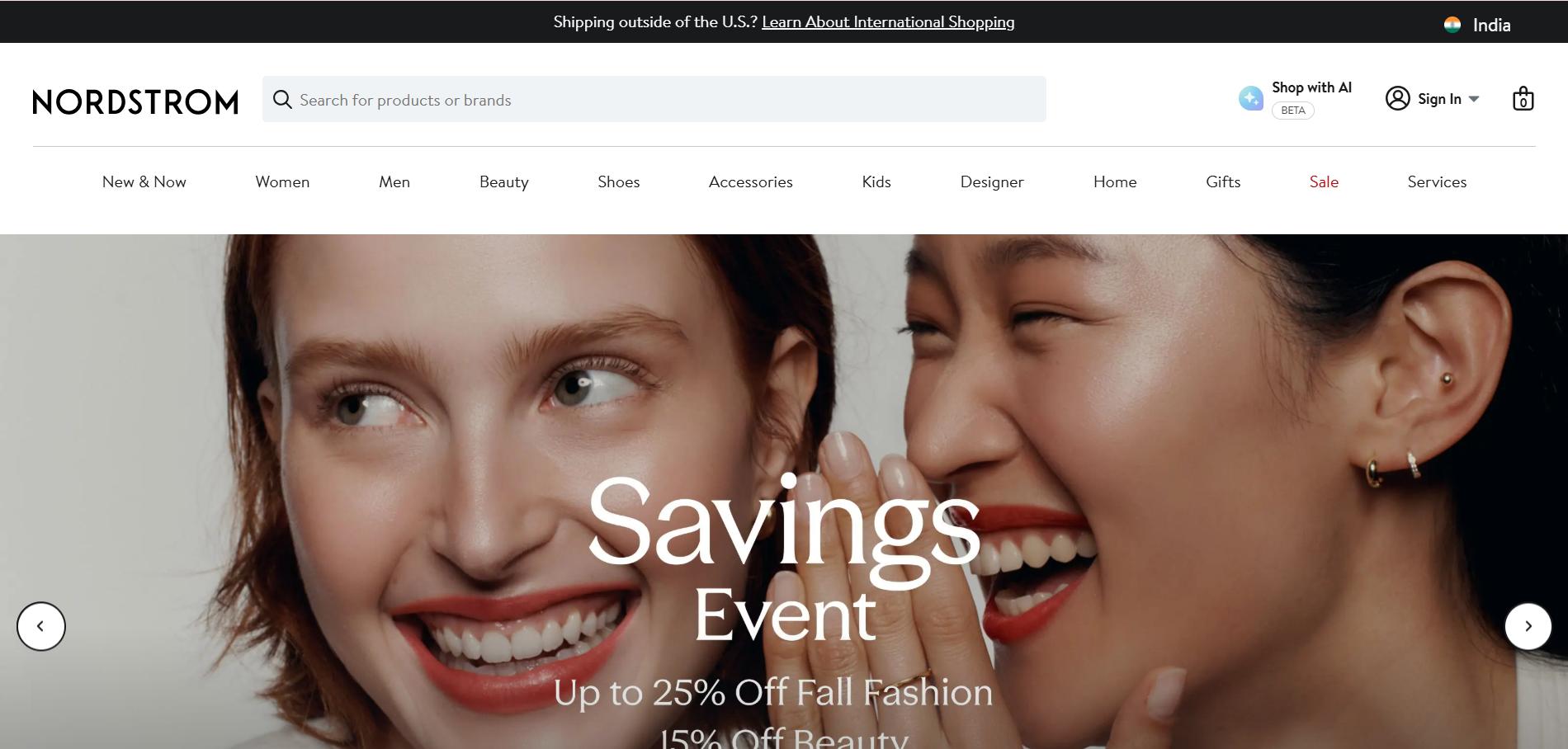
Nordstrom takes a service-focused approach to ecommerce, especially in fashion and premium retail. Fashion purchases are visual and personal, shaped by style, fit, color, brand, and occasion. Customers often need more than basic product descriptions to buy with confidence online.
Nordstrom’s ecommerce experience puts product presentation, imagery, category discovery, brand exploration, and the link between digital and physical retail at the center. It also prioritizes convenience after purchase. Flexible delivery and return options matter in fashion because shoppers may need to exchange items due to size, fit, or personal preference.
Key features of Nordstrom’s ecommerce experience include:
- Visual product discovery: Product imagery plays an important role in browsing.
- Brand discovery: Customers can explore different fashion brands through one platform.
- Personalized shopping: Recommendations can support product discovery.
- Online and store integration: Digital and physical experiences are connected.
- Flexible fulfillment: Customers have different ways to receive purchases where available.
- Returns and exchanges: Post-purchase flexibility is important for fashion shoppers.
Nordstrom shows how the best e commerce sites can differentiate themselves through service and experience rather than competing purely on product volume.
9. Best Buy
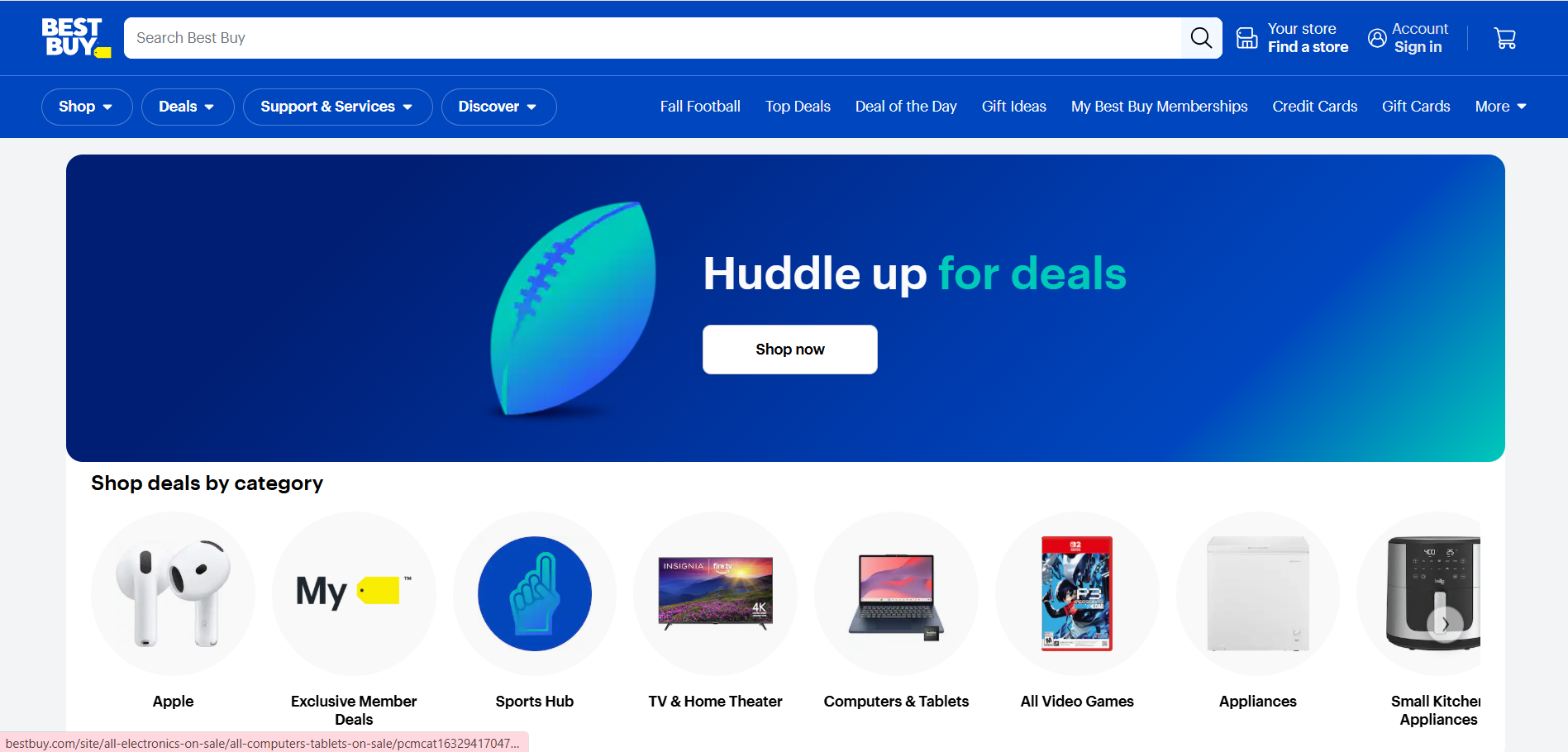
Best Buy builds its ecommerce experience around electronics, technology, appliances, entertainment products, and related services. Buying electronics usually requires research, since customers compare specifications, screen sizes, storage, performance, compatibility, features, accessories, and prices before making a choice.
Clear product details and comparison tools matter. Best Buy connects online research with its physical store network, so customers can browse and compare products online, then choose delivery or store pickup.
Key features of Best Buy’s ecommerce experience include:
- Detailed product specifications: Helps customers compare technical products.
- Product comparison: Customers can evaluate different models before purchasing.
- Electronics specialization: The website focuses strongly on technology categories.
- Store pickup: Customers can collect eligible products from stores.
- Delivery options: Products can be delivered based on availability.
- Services and support: Customers can access additional services related to their purchases.
Best Buy demonstrates how specialization can become an advantage in ecommerce. Rather than trying to compete across every category, an ecommerce business can build authority by creating a strong shopping experience around a specific product category.
10. Wayfair
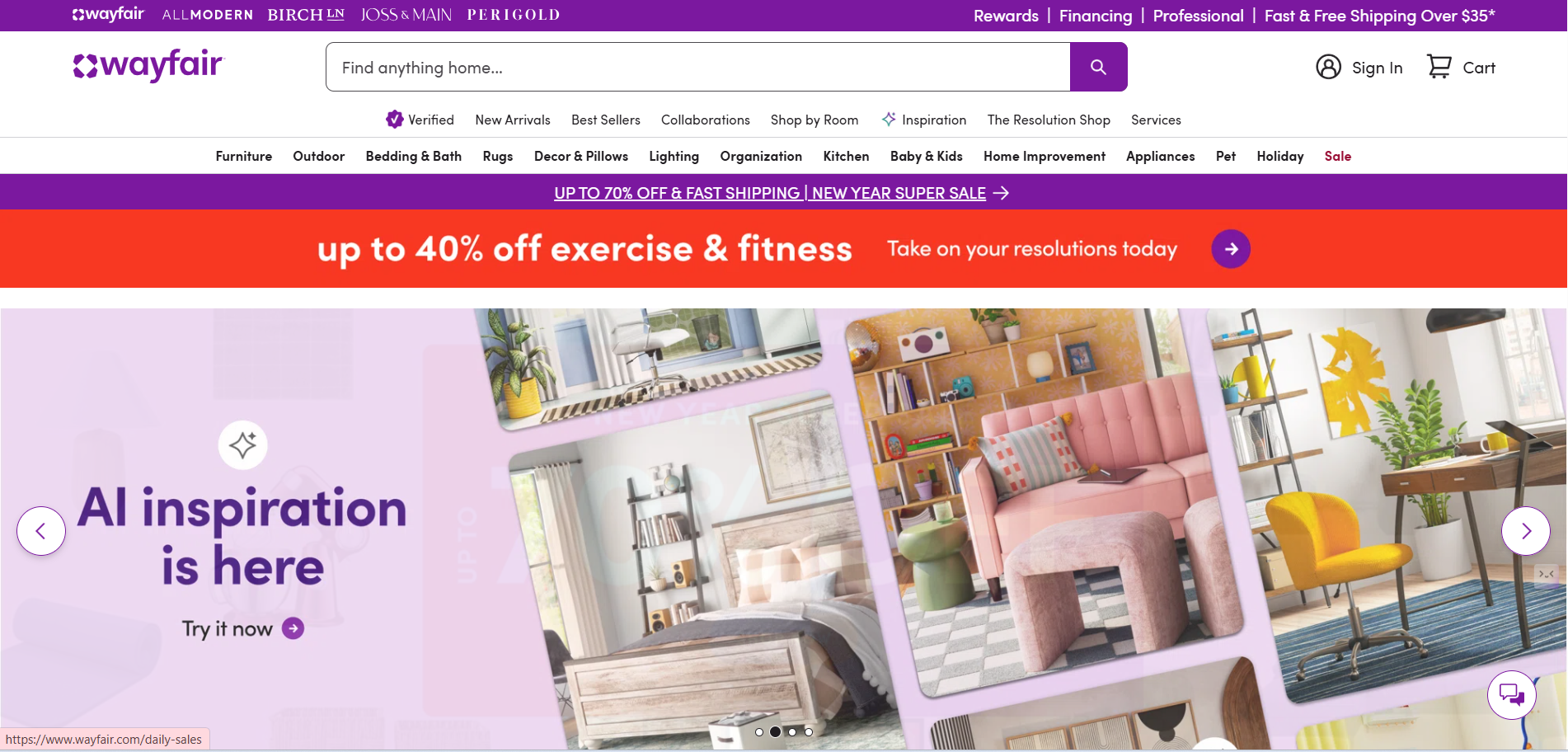
Wayfair is one of the most recognizable online destinations for furniture and home products. Furniture ecommerce is harder because customers can’t touch, sit on, or inspect an item before they buy it. Digital product presentation matters more as a result. Shoppers need clear details on dimensions, materials, colors, styles, finishes, and how a piece may look in their home.
Wayfair focuses its ecommerce experience on visual discovery, product images, filters, categories, recommendations, and detailed product information. Personalization also helps shoppers navigate a massive catalog. Rather than sorting through thousands of products themselves, customers can find items based on their style, category, room, or previous browsing behavior.
Key features of Wayfair’s ecommerce experience include:
- Visual product discovery: High-quality imagery helps customers evaluate products online.
- Extensive home catalog: Customers can explore furniture and home products across multiple categories.
- Detailed product information: Dimensions and specifications help reduce uncertainty.
- Filtering and search: Customers can narrow large product catalogs.
- Personalized recommendations: Relevant products can support discovery.
- Category-focused experience: The website is designed specifically around home and furniture shopping.
Wayfair demonstrates how the top ecommerce platforms and websites can use technology to recreate parts of the discovery experience that customers traditionally experienced in physical stores.
What Do the Top Ecommerce Websites Have in Common?
Although the businesses on this list operate very different ecommerce models, several common patterns can be seen across the top ecommerce companies. Amazon operates at marketplace scale, Walmart and Target combine physical stores with digital commerce, while businesses such as Apple, Home Depot, Nordstrom, Best Buy, and Wayfair focus on more specialized shopping experiences. Their business models may be different, but the strongest ecommerce websites share a similar approach: they make shopping easier, reduce friction, provide customers with greater flexibility, and continue supporting the customer even after the purchase has been completed.
They Make Shopping Easier:
The most effective ecommerce experiences are designed around reducing unnecessary effort for the customer. A shopper should be able to enter an ecommerce website, search for a product, compare available options, understand the important details, and complete the purchase without having to navigate through unnecessary steps. This is where elements such as search, navigation, filters, product descriptions, images, recommendations, pricing, availability, and a simple checkout process become important. When these elements work together, customers can move through the shopping journey more naturally.
This also explains why the best ecommerce websites do more than simply display products. They help customers make decisions. A large product catalog may give shoppers more choice, but if finding the right product becomes difficult, that choice can quickly become overwhelming. Strong ecommerce experiences therefore focus not only on how many products are available but also on how easily customers can discover and evaluate them.
They Connect Ecommerce With Fulfillment:
For an ecommerce business, the website may be where the customer places the order, but the customer’s experience does not stop there. From the shopper’s perspective, there is no separate “website experience” and “fulfillment experience.” It is simply one journey.
Consider a customer ordering a product online. Before placing the order, they want to know whether the item is available and when they can expect it. After checkout, they want confirmation that the order has been processed. Once it is shipped, they expect tracking information and delivery updates. If there is a delay or failed delivery attempt, they want to understand what happened and what they should do next.
This makes fulfillment an important part of the ecommerce experience. A website can provide an excellent shopping journey, but if delivery information is unclear or the post-purchase experience is difficult, that initial experience can quickly lose its value. The top ecommerce websites increasingly connect the storefront with fulfillment, delivery visibility, tracking, customer communication, and returns so that the customer experiences the journey as one connected process.
They Give Customers More Flexibility:
Customers do not all shop in the same way, and they do not all have the same expectations when it comes to delivery. One shopper may want the fastest available delivery, while another may prefer a lower-cost option. A customer who lives near a store may prefer to pick up an order, while another shopper may want the product delivered directly to their home.
The ability to provide different options can therefore make an ecommerce experience more convenient. Depending on the business model, this can include multiple shipping choices, store pickup, local inventory visibility, home delivery, flexible payment options, or convenient returns. For retailers with physical stores, connecting online and offline shopping can be particularly valuable because customers can choose how they want to browse, purchase, receive, or return products.
The common factor is not a specific feature. It is the ability to give customers more control over how they complete their shopping journey.
They Continue the Experience After Checkout:
One of the most important lessons from leading ecommerce businesses is that the customer journey does not end when the payment is completed. The period after checkout can have a major impact on how customers perceive the brand.
Order confirmation provides reassurance that the purchase has gone through. Shipping notifications keep customers informed about what is happening next. Tracking gives them visibility into the shipment, while delivery updates help them understand when the package is expected to arrive. If something goes wrong, customer support, exception handling, and clear communication become even more important.
Returns and refunds are another part of this experience. A customer may remember an ecommerce business not only because of how easy it was to purchase a product, but also because of how simple or difficult it was to resolve a problem. This is why post-purchase experience has become such an important part of modern ecommerce.
What Makes the Best Ecommerce Sites Successful?
The best ecommerce websites treat the customer journey as one connected experience. Shoppers don’t separate product discovery, checkout, fulfillment, delivery, tracking, and returns into isolated tasks. To them, each step is part of the same purchase.
Picture someone searching online for a new product. They might find it through search results, a recommendation, an advertisement, or a category page. Next, they compare products, review prices and availability, read product details, check delivery options, and decide whether to buy. After checkout, they get an order confirmation, wait for shipment, track the package, receive it, and may contact support or start a return.
Each interaction shapes the customer’s overall view of the ecommerce brand.
That’s why ecommerce success isn’t based only on how attractive a site looks. A polished storefront may make a strong first impression, but confusing navigation can make products difficult to find. A large catalog gives shoppers more options, yet weak filters can make those options harder to browse. Fast shipping matters, but inaccurate delivery estimates frustrate customers when orders arrive later than promised. The strongest ecommerce businesses connect the customer-facing shopping experience with the operational systems behind it.
A Strong Website Is Only the Starting Point
An ecommerce website is the part of the business that customers interact with directly, but it is supported by a much larger operational ecosystem. Behind every online order are processes involving inventory, order management, warehouses, fulfillment, carrier selection, shipping, tracking, customer communication, and returns.
When these processes work together, customers experience a smoother journey without necessarily seeing the complexity behind it. For example, when a website displays an estimated delivery date, that information may depend on product availability, fulfillment location, destination, shipping service, and the business’s operational capabilities. Similarly, when a customer receives real-time tracking information, multiple systems may be working together to provide that visibility.
This is why the ecommerce website cannot be viewed in isolation. The quality of the customer-facing experience increasingly depends on how well the systems behind the website work together.
Convenience Has to Continue Beyond the Cart
Convenience in ecommerce is not simply about having a quick checkout. It extends across the entire customer journey. Customers want to find products easily, understand what they are buying, know when they can receive the order, and have visibility once the shipment is on its way.
If an order is delayed, customers should not have to repeatedly contact support to find out what happened. If a delivery attempt fails, they should be able to understand the next steps. If they need to return a product, the process should be clear and easy to follow.
This is where many of the leading ecommerce businesses have built their advantage. They continue optimizing the customer experience after the purchase rather than treating checkout as the finish line. The objective is to make the complete journey feel connected, from the first product search to delivery and, when required, returns or refunds.
The Experience Needs to Scale With the Business
As an ecommerce business grows, the complexity behind the customer experience also increases. A small business may initially operate with a limited product catalog, a single warehouse, and a small number of shipping partners. As order volumes increase, the business may add more products, fulfillment locations, carriers, marketplaces, stores, and delivery regions.
Managing these processes manually can become increasingly difficult. More orders mean more tracking information, more delivery events, more exceptions, and potentially more returns that need to be managed. If the operational side of the business does not scale alongside the storefront, customers can eventually experience the impact through delays, limited visibility, or inconsistent communication. The top ecommerce companies demonstrate why scalability matters. Their digital experiences are supported by operational systems that can handle large volumes while continuing to provide customers with information and choices throughout the shopping journey.
How eShipz Can Help Ecommerce Businesses
As ecommerce businesses grow, shipping gets harder to manage. A brand may use multiple carriers across regions, service levels, and shipment types. Each carrier can follow different processes for tracking, delivery updates, exceptions, and returns. Handling those tasks manually adds work for operations teams and can lead to an inconsistent customer experience.
Shipping automation helps simplify that workload. eShipz connects ecommerce businesses with multiple carriers and manages key stages of the shipping journey in one centralized system, including carrier allocation, shipment processing, tracking, estimated delivery, NDR management, returns, and post-shipping visibility.
Key ways eShipz can support ecommerce businesses:
- Multi-carrier shipping: Connect with multiple carriers through a centralized shipping system instead of managing each carrier separately. This can make it easier for ecommerce businesses to manage different shipping requirements as they expand.
- Automated carrier allocation: Carrier selection can be automated using defined rules and data-driven processes based on factors such as destination, service requirements, cost, and historical performance. This reduces the need for teams to manually decide which carrier should handle every shipment.
- Shipment processing and automation: Automating repetitive shipping processes can help teams handle larger order volumes without adding the same level of manual effort to every shipment.
- Tracking and estimated delivery: eShipz brings shipment tracking and estimated delivery information into the post-purchase journey, helping businesses provide customers with greater visibility into where their orders are and when they are expected to arrive.
- NDR management: When a delivery attempt fails, NDR workflows can help businesses identify the issue and take appropriate action rather than allowing the shipment to move directly toward a return.
- Returns management: Returns can be managed as part of the broader shipping workflow, helping businesses create a more structured process for return pickups, shipment movement, and post-return visibility.
- Post-shipping visibility: A centralized view of shipments, delivery exceptions, tracking events, NDRs, and returns can help operations teams understand what is happening after an order leaves the warehouse.
- Better operational insights: Shipping and delivery data can help businesses identify carrier performance patterns, recurring delivery issues, and other operational gaps, supporting more informed decisions as the business scales.
Shipping automation is about more than creating labels. It connects an ecommerce order to the full delivery journey, from carrier allocation and shipment processing to tracking, delivery exceptions, NDRs, and returns. With a connected workflow, ecommerce businesses can cut operational complexity and give customers a more consistent post-purchase experience.
This matters even more for growing ecommerce companies. The ecommerce website starts the purchase, but the customer’s experience doesn’t end until the order arrives at their doorstep. A connected shipping operation helps businesses manage each step efficiently and keep customers updated throughout delivery.
Ecommerce Trends Shaping 2026
The next stage of ecommerce is likely to be shaped by several connected developments. As customer expectations continue to change, ecommerce businesses will need to look beyond the online storefront and focus on how technology, fulfillment, delivery, and customer experience work together.
- AI-powered personalization: AI will continue to influence how customers discover and evaluate products. From personalized recommendations and smarter search to customer support, demand forecasting, inventory planning, and operational decision-making, AI can help ecommerce businesses create more relevant experiences while also improving processes behind the scenes.
- Omnichannel commerce: The connection between online and offline shopping will become increasingly important. Customers may discover a product on a website, check availability at a nearby store, place an order through an app, and choose pickup or home delivery. Connecting websites, apps, stores, warehouses, and delivery networks can give customers more flexibility while helping retailers use their existing infrastructure more effectively.
- Flexible fulfillment: Delivery expectations will continue to influence the ecommerce experience. Customers increasingly want choices based on their individual needs, whether that means faster delivery, lower shipping costs, scheduled delivery, or store pickup. Ecommerce businesses will therefore need fulfillment operations that can support different delivery preferences without creating unnecessary complexity.
- Better post-purchase communication: The experience after checkout will become an even more important differentiator. Customers want to know when an order has been processed, when it has shipped, where it is, and when it is expected to arrive. Proactive notifications and clear delivery updates can reduce uncertainty and give customers greater confidence without requiring them to repeatedly search for tracking information.
- Smarter returns management: Returns will remain an important part of ecommerce as order volumes continue to grow. Businesses need efficient processes for return requests, reverse logistics, refunds, exchanges, and inventory recovery. Making returns easier for customers while keeping the process manageable for operations teams will become increasingly important.
- Connected ecommerce operations: Perhaps the biggest shift will be toward connecting the different systems that support the customer journey. The storefront, inventory, order management, warehouse, carrier network, customer support, tracking, returns, and analytics should not operate as completely isolated tools. When these systems can share information and work together, businesses can gain better visibility and create a more consistent experience from product discovery through delivery and beyond.
Together, these trends point toward an ecommerce environment where the storefront is only one part of the overall experience. The businesses that can connect customer-facing technology with fulfillment, delivery, data, and post-purchase operations will be better positioned to manage the increasing complexity of modern ecommerce while continuing to meet changing customer expectations.
Ecommerce Is No Longer Just About the Storefront
The clearest lesson from the top ecommerce websites in the USA is that success takes more than an attractive online store. The storefront gets customers in the door, but it is only the beginning. A strong ecommerce experience depends on connected product systems, inventory management, fulfillment operations, payment infrastructure, customer communication, shipping technology, analytics, and customer support working together.
The companies on this list take different routes. Amazon is built around convenience and fulfillment, while Walmart and Target connect digital commerce with physical retail. eBay demonstrates how the marketplace model can scale, while Home Depot and Lowe’s focus on specialized shopping journeys. Apple maintains a tightly controlled brand experience, while Nordstrom, Best Buy, and Wayfair build their ecommerce experiences around the specific needs of their categories.
For ecommerce businesses in 2026, the real opportunity lies in connecting these moving parts. Customers should not need to know which system processes their order, which warehouse fulfills it, or which carrier delivers it to their doorstep. They simply expect the entire journey to work smoothly.
This is where the connection between ecommerce and shipping becomes particularly important. Platforms such as eShipz can help businesses bring multiple carriers, shipping processes, tracking, estimated delivery, NDR management, returns, and post-shipping visibility into a more connected workflow. As an ecommerce business grows, this kind of shipping automation can help bridge the gap between what happens on the storefront and what happens after the customer clicks “Buy.”
Ecommerce is therefore moving beyond simply building better online stores. The next stage is about creating connected commerce experiences where the website, operations, fulfillment, shipping, delivery, and customer communication work together. And as customer expectations continue to evolve, that connection may become just as important as the storefront itself.